
One-Sided Link Exchange: What to Do When a Partner Removes Their Link
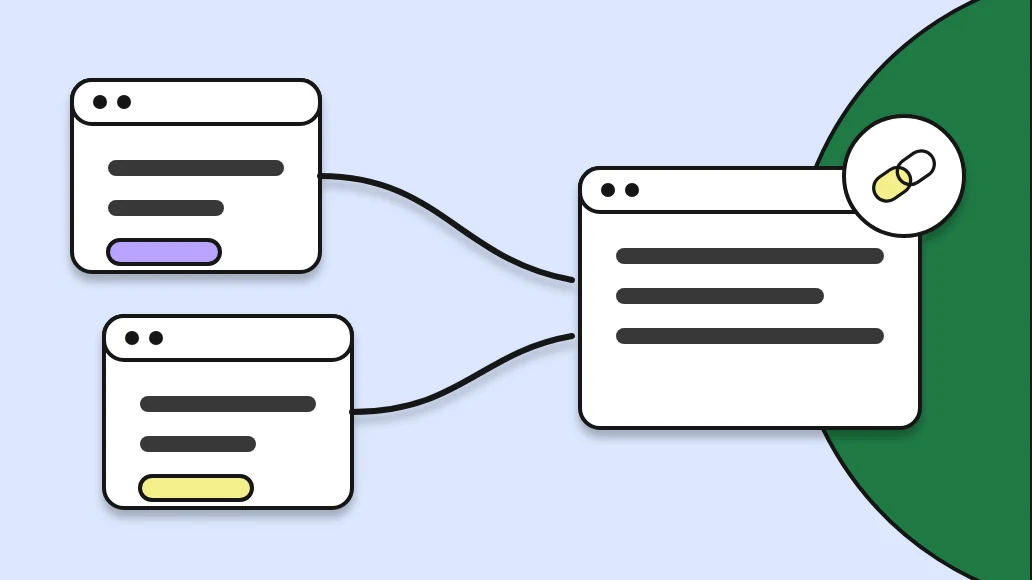
You check your swaps and something's off. Your link to the partner is still there, right where you put it. Their link to you is gone. In fact, welcome to the one-sided link exchange, probably the most common way swaps go wrong.
It's frustrating, for example, and it can feel like someone broke a deal. Sometimes they did. More often, though, it's an accident, and the way you handle it decides whether you keep a useful partner or lose one. Here's how I'd work through it.
Key takeaways
- Of course, most one-sided exchanges happen by accident, through redesigns and refreshes.
- Confirm the link is really gone before you contact the partner.
- Raise it once, calmly, with the exact page and link.
- Then decide on your own side based on whether the link helps your readers.
First, confirm it's really a one-sided link exchange
Before you write anything, check properly.
- Open their page in a normal browser. Search for your domain with the find tool.
- Check for a redirect. If the address bar changed, the page moved. Look for your link on the new URL. Google's guide to redirects explains how sites move pages.
- Check the link type. If the link is there but now carries
nofollow, that's a change in type, not a removal. It's a different conversation. - Check for JavaScript loading. Some sites load article content after the page opens. Give it a moment, or inspect the rendered page.
- Check your own page. Is your link to them actually still live and correct? It's embarrassing to complain and then find your side broke first.
If the link really is gone, you have a one-sided link exchange. Now work out why.
Why a one-sided link exchange usually happens
Even so, from what I've seen, a one-sided link exchange usually comes from one of these:
- A redesign or migration. Also, old content was rebuilt and outbound links didn't survive.
- A content refresh. On the other hand, an editor updated the article and dropped or replaced links.
- Content pruning. The page was removed or merged into another post.
- A new editor. Meanwhile, the person you made the deal with left, and their replacement doesn't know about it.
- A deliberate removal. Less common, but it happens. Sometimes after the partner gets nervous about link exchanges in general.
Only the last one is a broken promise. The rest are ordinary website life.
How to raise a one-sided link exchange
Keep it calm and specific. On the other hand, you want to make it easy for them to fix, not hard for them to save face.
Hi Alex, quick one. At the same time, the link from your guide on remote onboarding to our checklist seems to have dropped out, maybe in the recent update. Our link to your hiring guide is still in place on our side. Any chance you could add it back? Here's the exact URL.
For example, what makes that work: it names the page, describes the link, mentions your side without making it a threat, and gives the URL. No talk of rankings, no ultimatums.
Send it once. If there's no reply after a week or two, a single follow-up is fine. After that, you've done your part.
See when one side of a swap goes missing
Record both links in one exchange and get both checked, daily on paid plans.
Then decide your side of a one-sided link exchange
Instead, this is the bit of a one-sided link exchange that people find hardest. If the partner doesn't restore their link, what do you do with yours?
I'd ask one question: does our link to them help our readers?
- If yes, leave it. It was a good link before the deal and it still is. Not every link needs to be returned.
- If no, you have good reason to remove it. In addition, the only reason it existed was the exchange, and that's gone.
There's also a middle path: keep the link but add rel="nofollow". Google's guide to qualifying outbound links covers when that fits. It keeps the reference for readers while removing the endorsement.
Still, what I wouldn't do is remove your link the same day without a word. If the removal on their side was an accident, a quick tit-for-tat turns a fixable mistake into a broken relationship.
A word on one-sided link exchange patterns
Here's a slightly uncomfortable thought. If one-sided swaps keep happening to you, it may be worth asking how many swaps you're doing, and why. Google's spam policies describe excessive link exchanges as link spam. Swaps built on relevance tend to survive refreshes, because the editor sees a link that still helps. Swaps built only on the deal are the first to go when someone tidies up.
Our guides on reciprocal link exchange and what link exchange means in SEO go deeper on keeping swaps healthy.
Picture the slow version of a one-sided link exchange
Picture an agency with a few dozen exchanges across client sites, all recorded in a spreadsheet when they were agreed. Nobody rechecks them. Over a year, several partners redesign, some refresh their content, for example, and one closes their blog.
When someone finally checks, a good share of the exchanges have each turned into a one-sided link exchange, and nobody can say when. Instead, the partners who'd have happily fixed it a week after the change have long forgotten. A few emails go out. Most get no reply.
The problem wasn't the partners. It was the gap between the change and anyone noticing.
Record the outcome of a one-sided link exchange
However a one-sided link exchange ends, write it down: the date you noticed, what you asked, how the partner responded, and what you did with your side. If you work with this partner again, or if a colleague is approached by them, that history matters.
Three-way swaps can go one-sided too, on any leg. Our ABC link exchange guide covers how to track each leg.
Where SEOENV fits a one-sided link exchange
SEOENV was built for exactly this. A Master Link Exchange record holds what you gave and what you got in one row, and both links are checked. Three-way deals sit in an ABC Link Exchange record with a check on each leg. On paid plans, those checks run daily, and the Link Status Report shows when one side becomes Lost or changes type. The partner's contact and deal history live in Partners, so you know who to write to.
Frequently asked questions
What is a one-sided link exchange?
It's a swap where one partner's link has been removed or changed while the other partner's link is still in place.
Should I remove my link in a asymmetrical swaps?
Ask first. If the link doesn't come back and yours doesn't help your readers, removing it or adding nofollow is reasonable. If it does help readers, you can leave it.
Why do partners create a one-way exchanges?
On the other hand, usually by accident, through redesigns, content refreshes, pruning or a change of editor. Deliberate removals happen but are less common.
How do I find out about a uneven link exchanges?
Record both links of every exchange and recheck them regularly. A tool that checks both sides shows when one link goes missing or changes type.
Wrap-up and sources
A one-way link swaps is a relationship problem as much as an SEO one. Handle it that way. Use these primary sources to check anything in this guide:
- Google Search Central: Spam policies (link spam)
- Google Search Central: Qualify your outbound links
- Google Search Central: Redirects and Google Search
How we wrote this guide. Kritika Das wrote it from day-to-day work logging and checking link exchanges, guest posts and paid placements, for example, and checked each claim against the sources above. We update it when Google changes its guidance.
Catch one-sided swaps while they're still easy to fix
Log every exchange with both links and see the moment one side changes.
Article written by
Kritika Das
Head of Marketing at SEOENV · Forbes-featured content writer
In other words, kritika Das is Head of Marketing at SEOENV and a Forbes-featured content writer. Still, she writes about the operations side of link building: how agencies, freelancers and in-house teams log, check and report the links they build. Her guides come from day-to-day work with link builders and are checked against Google’s own documentation.

Leave A Comment