
Link swap requests: a ten-minute routine for yes, no or not now
Link swap requests arrive faster than anyone can vet them properly. So the good ones wait, the poor ones get a polite maybe, and nobody remembers what was decided. In other words, this routine gives each request ten minutes and a recorded answer.
Without a process, link swap requests decide for you
Also, Without a routine, the loudest request wins, not the best one.
Meanwhile, some link swap requests are thoughtful: a relevant site, a specific page, a clear suggestion. Many are templates sent to hundreds of people. Telling them apart takes a few minutes each, and those minutes add up when a dozen arrive every week.
On the other hand, picture an in-house SEO who shares an inbox with the content team. Swap emails pile up between other work. Some get answered twice by different people. Because of that, Others sit for a month, by which point the sender has moved on.
Slow replies
Good partners give up while requests wait for someone to look at them.
Repeat work
Two people vet the same site because nobody wrote down the first answer.
Unclear offers
You cannot say yes quickly if you do not know which of your sites has room.
How to triage link swap requests in ten minutes
Work top to bottom. Stop as soon as the answer is clearly no.
- Minute 1-2: Is it relevant? Open their site. If your readers would not care about it, the answer is no. Stop here.
- Minute 3-4: Is it a real site? Look for a real audience, original articles, named authors and pages people would actually read. Watch for the signs of a link farm.
- Minute 5-6: What do they want? Which page, which anchor, and is it a direct swap or a three-way ABC arrangement?
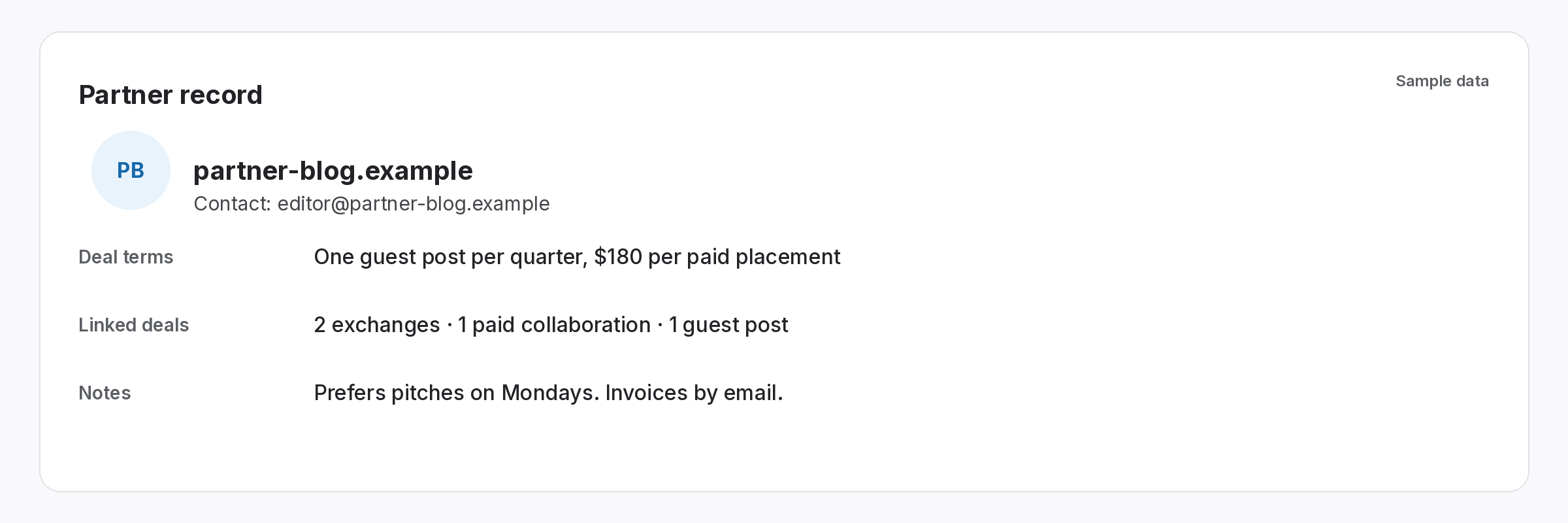
- Minute 7-8: Have you dealt with them before? Check your partner records. Of course, a past swap that went Lost or Nofollow tells you a lot.
- Minute 9-10: Decide and log it. Yes, no, or not now. Write the answer down so nobody vets the same site twice.
Know what you can offer before answering link swap requests
A fast yes needs a clear list of where you have room.
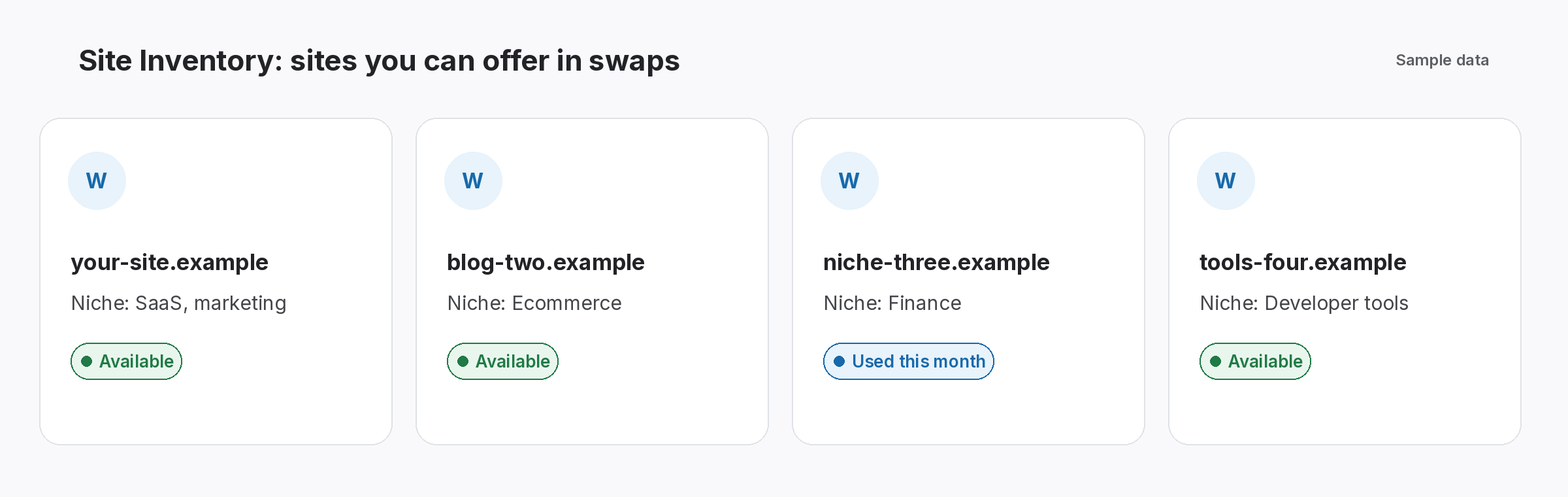
So Site Inventory lists the sites you can offer in swaps, with niche and availability. So when a good request arrives, you can match it to the right site without asking around.
- Niche: offer a site whose readers fit the partner’s topic.
- Availability: see which sites have room before you promise anything.
- Free plan: up to 25 Site Inventory sites. Paid plans remove the limit.
Three short replies to link swap requests
- Yes: “Thanks, [name]. Your [page] fits well with our [page]. We can offer a link from [site]. Here is the URL and suggested anchor. Could you share yours?”
- No: “Thanks for reaching out, [name]. Our audiences do not overlap enough for this to help readers, so we will pass this time.”
- Not now: “Thanks, [name]. We do not have a good fit right now, but we have noted your site and will get in touch if that changes.”
A recorded no saves as much time as a quick yes.
In addition, Next time the same site writes in, the answer is already there.
Records that speed up decisions on link swap requests
At the same time, Live SEOENV features for teams handling swap requests.
Master Link Exchange
Once you say yes, log both sides and both links get checked.
We used to answer link swap requests whenever someone had a spare moment, which meant some never got answered at all. In fact, Giving each one ten minutes and a written decision turned a messy inbox into a short daily task.
Saying yes to link swap requests without building a pattern
Accepting a swap is a small decision. In fact, Accepting every swap is a strategy, and not always a good one. Google’s spam policies list excessive link exchanges as link spam, so the triage above starts with relevance for a reason.
Instead, every few months, step back and look at the swaps you have accepted as a group. Our link exchange risk review walks through that. For background on how swaps work, read link swapping explained and how to keep a swap sites inventory.
Questions about link swap requests
Should I reply to every link swap request?
Reply to the relevant ones. Obvious templates from unrelated sites can be ignored, but log the domain so nobody vets it again.
How do I tell a real site from a link farm?
Then look for a real audience, original content and named authors. After that, Pages stuffed with unrelated outbound links are a warning sign.
Is a three-way ABC swap better than a direct one?
It avoids a direct reciprocal pair, but it is still an exchange. Vet every site involved, including the third one.
Where should I record the decision?
Somewhere the whole team can see it. In SEOENV, add the partner and a note, so the next request from that site shows the history.
Does SEOENV find or send swap requests?
No. SEOENV is where you record partners, the sites you can offer and the swaps you agree, then check both links.
Answer each swap request once.
Keep partners, offers and agreed swaps in SEOENV, so the history is there next time.
