
A referring domain is a website that links to yours at least once. If one site links to you from ten pages, that counts as ten backlinks but only one referring domain. So the number tells you how many different sites link to you, not how many links you have.
Referring domain: definition and how to count one
Why referring domain counts get confused
Backlinks and domains measure different things.
Often, reports mix up backlinks and linking sites. However, a site with a hundred backlinks from three domains is very different from one with a hundred links from a hundred domains. So clients can misread progress when the two numbers sit side by side without explanation.
For example, picture a client whose backlink count jumps after a partner adds a sitewide footer link. Because the count of linking sites stays the same, the agency can explain that one site changed, not a hundred. Then the client understands the real picture.
Sitewide links
One site, thousands of backlinks.
Tool differences
Each crawler counts a different slice.
Subdomains
Some tools group them, while others do not.
Referring domain vs related terms
Four terms that often get mixed up, especially in reports.
- Backlink: one link from one page to your site.
- Referring page: a page that contains at least one link to you.
- Referring domain: a site that links to you at least once.
- Root domain: the main domain name, such as example.com, without subdomains.
- Referring IP: the server address a linking site sits on.
Why each referring domain matters
Variety is a signal in itself.
Usually, links from many different sites carry more weight than many links from one site. So a new linking site is often worth more than another link from a site that already links to you. In addition, the structure of a domain name explains why tools sometimes treat subdomains as separate sites, and why two reports can disagree about the same set of links.
- New sites: often more valuable than repeat links.
- Relevance: still matters more than count.
- Subdomains: check how your tool counts them.
Count referring domain totals from your own records
For the links you built, your records are exact.
Usually, crawler-based tools estimate counts for the whole web. However, for the links you built, your own records are more accurate. So group your link list by linking site and count the distinct sites. In addition, our guide on how to count linking sites covers the steps.
- Group: links by linking site.
- Count: distinct sites.
- Check: which are still live.
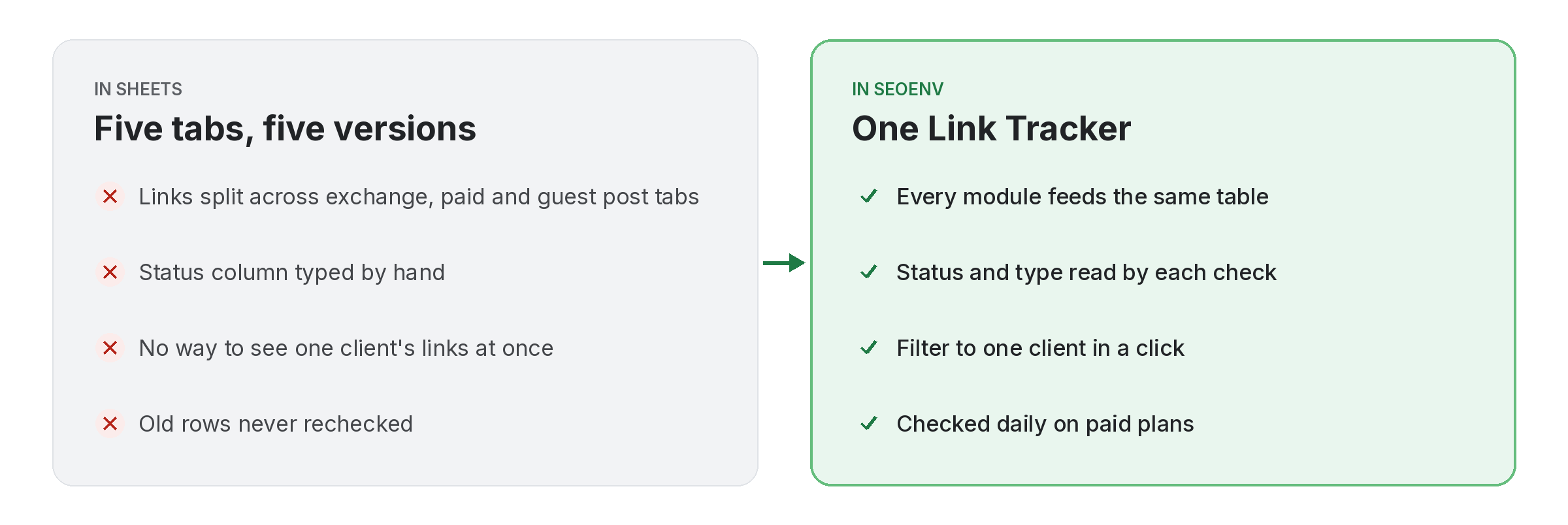
Count sites, not just links.
Variety says more than volume.
Track the sites that link to you
Free tools and live SEOENV features.
Clients often see two numbers in reports and wonder why they differ. So we wrote this definition to make the difference clear.
Growing your referring domain count
Focus on earning links from relevant sites that do not link to you yet. Then, track which sites you already have, so outreach goes to new ones. Besides, our guide to turning competitor backlinks into a shortlist helps, and so does our link prospecting log guide.
However, avoid chasing counts with low-quality sites. Also, Google’s spam policies still apply. For context on metrics, see our guide to link building metrics.
Questions about the referring domain
What is a referring domain?
A website that links to yours at least once.
How is it different from a backlink?
A backlink is one link, whereas many backlinks can come from one site.
Why do tools show different counts?
Each tool crawls a different part of the web and treats subdomains differently.
Is a new site worth more than a repeat link?
Often, yes, though relevance still matters more than count.
How do I count mine?
Group the links you built by linking site, and use a crawler-based tool for the rest.
Are linking domains the same as referring domains?
Yes. Linking domains is another name for referring domains: the number of unique websites that link to you, however many links each one gives.
Know which sites link to you.
Record every link you build and check it stays live.