
By SEOENV Team | Published October 23, 2026
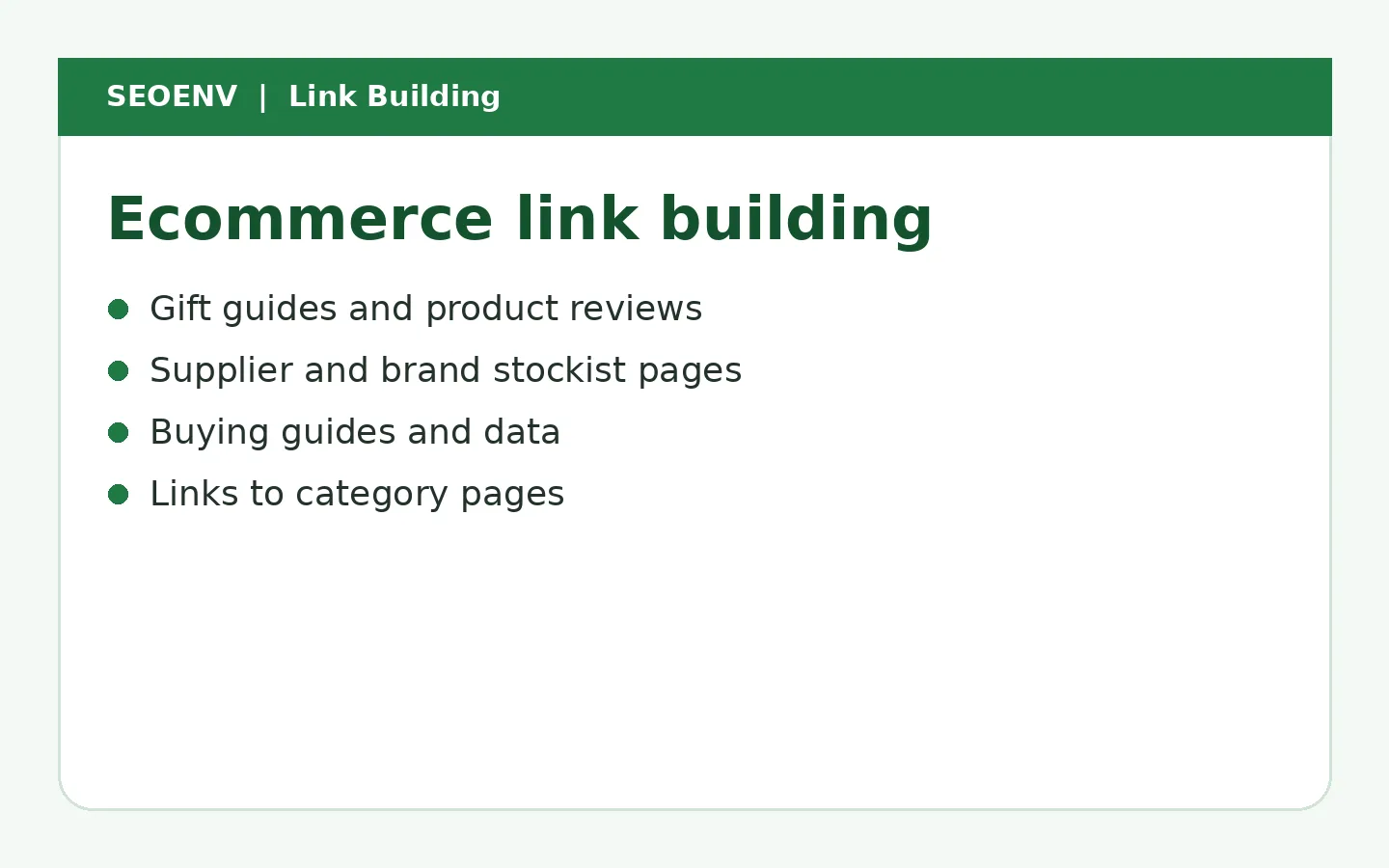
Ecommerce link building works best when you give people a reason to link beyond "buy this": gift guides and product reviews, stockist pages from the brands you sell, buying guides that answer real questions and data stories journalists want. Point most links at category pages and helpful guides, then use internal links to pass that value to products. Paid or gifted placements must be disclosed and marked sponsored.
This guide covers ecommerce link sources, where to point links and how to evaluate an ecommerce link building agency.
Key takeaways
- Product pages rarely earn links on their own.
- Gift guides, reviews and suppliers are reliable ecommerce sources.
- Buying guides and data pieces earn editorial links.
- Point links at category pages and pass value internally.
- Product reviews in exchange for free products should be disclosed.
Ecommerce link sources
| Source | Effort | Notes |
|---|---|---|
| Brand and manufacturer stockist pages | Low | Ask brands you sell |
| Supplier pages | Low | Often overlooked |
| Gift guides | Medium | Seasonal; pitch early |
| Product reviews by bloggers | Medium | Disclose gifted products |
| Buying guides on your site | Medium-high | Earn editorial links |
| Data and trend stories | High | Digital PR |
| Charity and community partnerships | Medium | Local relevance |
| Unlinked brand mentions | Low | Quick wins |
Where to point ecommerce links
Product pages come and go as stock changes, so links to them can end up pointing at discontinued items. Category pages and guides are more stable.
| Page | Why link here |
|---|---|
| Category pages | Stable, high-intent, pass value to many products |
| Buying guides | Earn editorial links, link to categories |
| Brand pages | Relevant for brand searches |
| Bestselling evergreen products | Stable enough to support |
Google's ecommerce best practices cover site structure and how to handle discontinued products, which matters for preserving links.
How to earn ecommerce backlinks
Gift guides
Editors compile gift guides months ahead. Build a list of publications and pitch products with images, prices and a short angle well before the season.
Product reviews
Send products to relevant reviewers. The FTC's Endorsement Guides FAQ says reviewers should disclose free products; Google's qualify outbound links guidance says links in exchange for products should be marked sponsored.
Stockist and brand pages
If you're an authorised retailer, ask the brand to list you on its "where to buy" page.
Buying guides
"How to choose a running shoe" or "mattress firmness explained" earn links from forums, blogs and journalists.
Data stories
Anonymised trends from your sales (what's selling where, seasonal shifts) can become news.
Ecommerce links break more than most. Products are discontinued, URLs change during replatforming, and gift guides are taken down after the season. Links you worked hard for end up pointing at 404s.
Catch broken ecommerce links before they cost you
SEOENV flags links that are Lost or Broken.
Worked example: a seasonal plan (example data)
This plan and figures are invented example data for an online kitchenware store.
| Activity | Outreach | Links (example) | Target |
|---|---|---|---|
| Brand stockist pages | 15 brands | 9 | Brand pages |
| Gift guide pitches (Aug-Oct) | 60 editors | 11 (6 sponsored) | Category pages |
| Buying guide: "choosing a chef's knife" | 40 pitches | 7 | Guide |
| Supplier pages | 5 | 3 | Homepage |
The guide links pass value to the knife category via internal links.
Choosing an ecommerce link building agency
Ask for ecommerce examples, how they handle gifted products and disclosure, whether links point at categories or products, and how they report.
Common mistakes
- Linking to product URLs that will be discontinued.
- Not redirecting old product URLs after replatforming.
- Undisclosed gifted reviews.
- Buying followed links on generic "shopping" blogs.
Protecting links during a replatform
Before migrating, export every URL with backlinks and map each one to its new equivalent with a 301 redirect. After launch, check your most important built links by hand.
How SEOENV handles this
SEOENV tracks links by target URL and project, so you can see which category pages your links support. Paid Collaborations record gifted or paid placements with cost and status. Status checks show when links break after site changes.
Give people a reason to link beyond the product, point links at stable pages and check them after every site change.
Start tracking your ecommerce backlinks
Free for up to 20 links, checks on every plan.
Related reading
- How to Get Backlinks: 15 Proven Ways That Work in 2026
- Link Equity (Link Juice) Explained for Site Owners
- Digital PR for SEO: How to Earn Links from News Sites
- SaaS Link Building: A Practical Guide for Software Companies
- Paid Backlinks and Google
Sources
- Google Search Central: Ecommerce site best practices
- FTC: Endorsement Guides FAQ
- Google Search Central: Qualify your outbound links
How we wrote this
The SEOENV Team wrote this guide from our day-to-day work tracking link exchanges, guest posts and paid placements, and checked the guidance against the sources listed above. Any numbers in worked examples are illustrative example data, not results from a real site or study. We review our guides when Google updates its documentation.
Frequently asked questions
How do ecommerce sites get backlinks?
Through brand stockist pages, gift guides, product reviews, buying guides and data stories.
Should I build links to product pages?
Prefer category pages and guides, which are more stable, then pass value to products internally.
Are gifted product reviews allowed?
Yes, with disclosure. Links given in exchange for products should be marked sponsored.
What happens to backlinks when a product is discontinued?
Redirect the URL to the closest relevant category or replacement product to keep the link's value.
Is an ecommerce link building agency worth it?
It can be, if they show ecommerce examples and handle disclosure properly.

Leave A Comment